
“You Expected Your Baby Bump… Not the Back Pain That Came With It.”
Pregnancy is one of the most exciting journeys in a woman’s life. Every kick, every ultrasound, and every milestone brings anticipation and joy. But for many women, this journey is also accompanied by an unexpected challenge—persistent back pain.
What may begin as mild discomfort during the second trimester can gradually make simple daily activities difficult. Standing while cooking, walking through the supermarket, climbing stairs, turning in bed, or even sitting at work for long hours may become uncomfortable.
Many mothers simply accept this pain because they hear the same advice repeatedly:
“It’s normal.”
“It will disappear after delivery.”
“Just take more rest.”
Although back pain is common during pregnancy, living with constant pain is not something every woman has to accept.
According to research published in the Journal of Family Medicine and Primary Care, nearly half of pregnant women experience pregnancy-related low back pain, making it one of the most common musculoskeletal complaints during pregnancy. Indian studies have also reported that many women experience moderate to severe back pain that affects sleep, walking, work, and everyday activities. Physiotherapy for Pregnancy-Related Back Pain has been shown to help reduce pain, improve mobility, strengthen supporting muscles, and make everyday movements more comfortable—without medication in most cases.
At Genesis Sports Physiotherapy Clinic, Mumbai, Dr Raina Ranney provides personalised Physiotherapy During Pregnancy, helping expectant mothers stay active, move comfortably, and prepare their bodies for childbirth through safe, evidence-based rehabilitation.
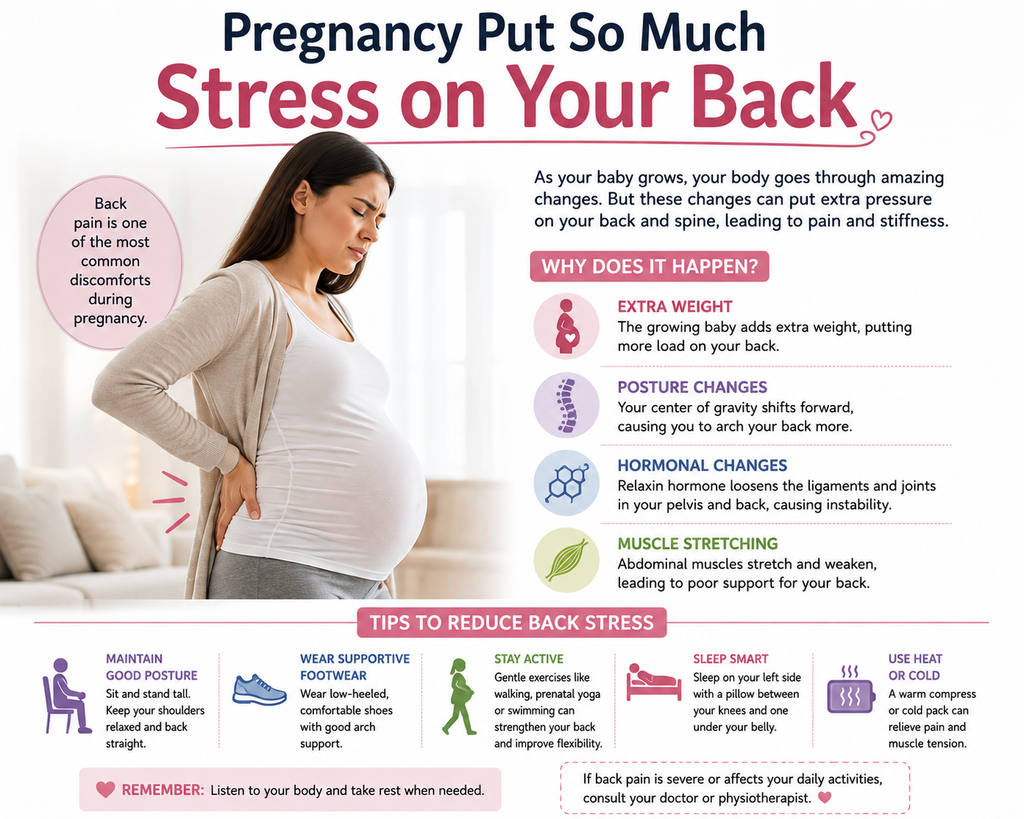
Why Does Pregnancy Put So Much Stress on Your Back?
Pregnancy is much more than a growing abdomen.
Almost every system in your body adapts to support your baby’s development. These natural changes can place additional stress on your spine, pelvis, muscles, and joints.
Your Centre of Gravity Moves Forward
As your baby grows, your body naturally shifts its weight forward.
To maintain balance, many women lean backwards slightly, increasing the curve in the lower back. This places extra pressure on the lumbar spine and surrounding muscles.
Hormones Loosen Your Ligaments
During pregnancy, hormones such as Relaxin prepare the pelvis for childbirth.
While this increased flexibility is beneficial for delivery, it also reduces joint stability, particularly around the pelvis and lower back.
As a result, muscles must work harder to support these joints, which may lead to fatigue and pain.
Core Muscles Become Stretched
The abdominal muscles gradually stretch as the uterus expands.
These muscles normally help stabilize the spine.
When they become weaker or less effective, the back muscles often compensate by working harder, increasing strain and discomfort.
Additional Body Weight
Healthy pregnancy naturally involves gradual weight gain.
The spine, hips, knees, and feet all experience increased loading throughout pregnancy, particularly during prolonged standing and walking.
Changes in Daily Movement
Simple activities suddenly become more demanding.
- Getting out of bed
- Picking up objects
- Sitting for long periods
- Walking
- Climbing stairs
- Driving
- Household work
Without proper body mechanics, these everyday movements may place unnecessary stress on the back.
Not Every Pregnancy Back Pain Feels the Same
Pregnancy-related pain can occur in different areas depending on which structures are under stress.
Understanding the location of pain often helps guide treatment.
Lower Back Pain
The most common type.
Pain is usually felt above the hips and may worsen after prolonged standing, walking, or sitting.
Pelvic Girdle Pain
Pain develops around the pelvis, buttocks, groin, or pubic bone.
Women often notice discomfort while:
- Turning in bed
- Walking
- Standing on one leg
- Wearing trousers
- Getting into a car
- Climbing stairs
Upper Back Pain
As breast size increases and posture changes, extra strain develops around the upper back, shoulders, and neck.
Many women experience stiffness after working on a laptop or sitting for long periods.
Sciatic-Type Pain
Some women develop pain that travels from the lower back into the buttock or leg.
Although often called “sciatica,” pregnancy-related leg pain may have several causes, making professional assessment important.
Who Is More Likely to Develop Pregnancy-Related Back Pain?
While any pregnant woman can develop back pain, certain factors increase the likelihood.
These include:
- Previous history of back pain
- Previous pregnancy-related back pain
- Weak core muscles
- Sedentary lifestyle
- Physically demanding work
- Long hours of standing
- Carrying toddlers during pregnancy
- Multiple pregnancy (twins or more)
- Poor posture
- Rapid weight gain
Having one or more of these risk factors does not guarantee pain, but it highlights the importance of preventive care.
Ignoring the Pain May Affect More Than Your Comfort
Many women continue pushing through the pain because they believe it is unavoidable.
However, persistent pain may gradually affect several aspects of daily life.
It may reduce:
- Walking tolerance
- Sleep quality
- Ability to exercise
- Work productivity
- Household activities
- Mood and confidence
- Physical activity before delivery
Some women even begin avoiding movement altogether.
Unfortunately, prolonged inactivity can weaken muscles further, making the problem worse.
This is why early physiotherapy often focuses on maintaining safe movement, rather than complete rest.
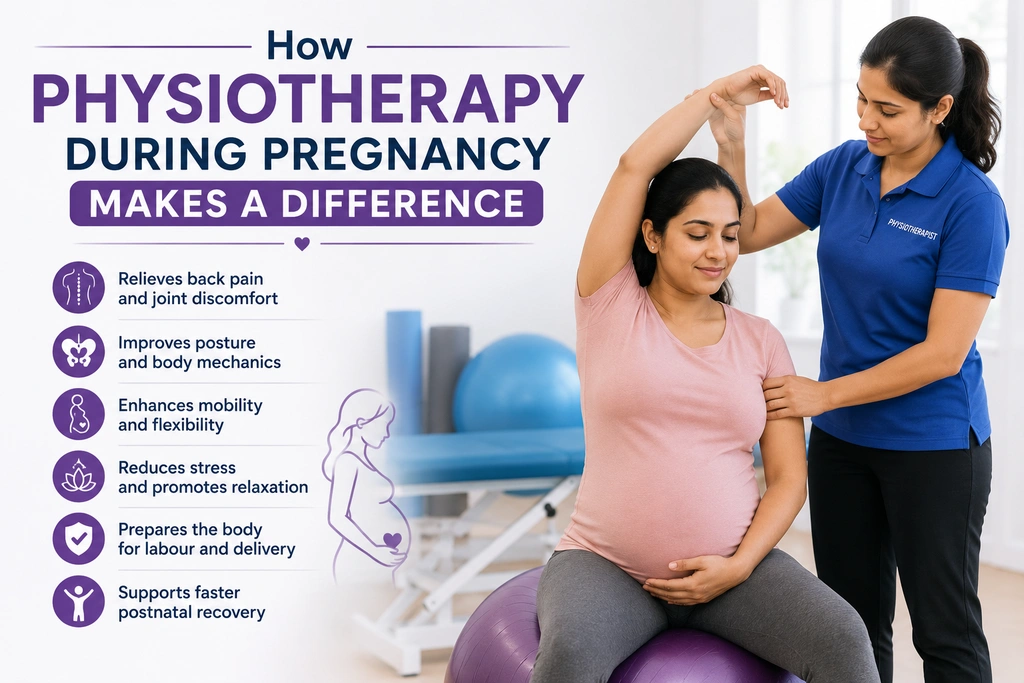
How Physiotherapy During Pregnancy Makes a Difference
Physiotherapy is not about forcing exercises or pushing through pain.
Instead, it helps your body adapt to the physical changes of pregnancy while protecting your joints and muscles.
A personalised treatment programme may include:
Movement Assessment
Every pregnancy is different.
Your physiotherapist carefully evaluates posture, movement patterns, muscle strength, flexibility, balance, and daily activities before planning treatment.
Pain Management Without Routine Medication
Hands-on physiotherapy techniques, gentle mobility exercises, and posture correction may help reduce discomfort while avoiding unnecessary medication whenever appropriate.
Improving Core Support
Pregnancy-safe exercises strengthen the muscles that support your spine without placing excessive pressure on the abdomen.
These exercises are carefully modified according to the stage of pregnancy.
Pelvic Stability Training
Targeted exercises help improve the coordination of muscles surrounding the pelvis, making walking, standing, and changing positions more comfortable.
Postural Education
Small changes in posture while sitting, standing, sleeping, lifting, or working can significantly reduce unnecessary strain on your back.
Your physiotherapist teaches practical techniques that fit naturally into your daily routine.
Breathing and Relaxation Techniques
Proper breathing improves core support while also preparing the body for labour and reducing unnecessary muscle tension.
Staying Active Is Usually Better Than Staying Still
Years ago, women with pregnancy-related back pain were often advised to rest completely.
Today, research suggests otherwise.
For most uncomplicated pregnancies, safe, guided movement is generally more beneficial than prolonged bed rest.
Regular physiotherapy-guided activity may help:
- Reduce stiffness
- Improve circulation
- Maintain muscle strength
- Support healthy posture
- Improve endurance
- Reduce stress
- Prepare the body for labour
- Improve overall confidence during pregnancy
The important point is that exercises should always be appropriate for the stage of pregnancy and individual medical condition.
That is where professional guidance becomes valuable.
Your Body Is Preparing for Birth—Your Muscles Need Preparation Too
Pregnancy is often described as a natural process, but “natural” doesn’t always mean “easy.”
As your baby grows, your muscles, joints, and ligaments are constantly adapting to support both you and your baby. Without proper guidance, these changes may lead to increasing discomfort, reduced mobility, and difficulty performing everyday activities.
This is where Physiotherapy During Pregnancy plays an important role.
Rather than asking you to avoid movement, physiotherapy helps you move more efficiently, safely, and comfortably throughout your pregnancy.
The aim is to reduce unnecessary strain, improve muscle support, and prepare your body for labour and recovery after childbirth.
A Personalised Treatment Plan—Because Every Pregnancy Is Different
No two pregnancies are exactly alike.
Some women experience pain early in the second trimester, while others only develop discomfort towards the end of pregnancy. Some continue working full-time, while others spend most of their day caring for older children.
At Genesis Sports Physiotherapy Clinic, every treatment programme begins with understanding your individual needs.
Your rehabilitation plan may be based on:
- Stage of pregnancy
- Pain location
- Daily routine
- Occupation
- Previous pregnancies
- Previous back or pelvic injuries
- Exercise habits
- Medical advice from your obstetrician
- Functional limitations
- Personal goals
Instead of following a standard exercise chart, treatment is tailored to your body and your pregnancy.
How Dr Raina Ranney Helps Expectant Mothers Move Comfortably
At Genesis Sports Physiotherapy Clinic, Mumbai, Dr Raina Ranney believes that pregnancy should be remembered for the excitement of welcoming a new life—not for months of unnecessary pain.
Dr. Raina completed her undergraduate degree in Physiotherapy from D. Y. Patil College before earning her Master’s Degree in Musculoskeletal Physiotherapy from the University of Melbourne, Australia.
Her international education and continued participation in advanced clinical workshops have strengthened her expertise in musculoskeletal rehabilitation, movement analysis, pain management, and evidence-based physiotherapy.
Her approach combines clinical knowledge with compassionate care.
Instead of focusing only on where the pain is located, Dr. Raina carefully evaluates how your entire body moves during pregnancy. She identifies the underlying factors contributing to discomfort and develops a personalized treatment plan that fits your lifestyle and stage of pregnancy.
Her treatment philosophy focuses on:
- Reducing pain naturally whenever appropriate
- Improving posture and movement
- Restoring muscle balance
- Building pregnancy-safe strength
- Preparing the body for labour
- Supporting recovery after childbirth
- Helping women remain active throughout pregnancy
Every woman receives one-on-one attention, practical education, and exercises designed specifically for her condition.
Small Everyday Changes Can Make a Big Difference
Many pregnancy-related back problems are aggravated by everyday habits rather than major activities.
Simple modifications can often reduce unnecessary stress on the spine.
When Standing
Avoid standing with your weight shifted onto one leg for long periods.
Distribute your weight evenly through both feet.
When Sitting
Choose a chair that supports your lower back.
Avoid sitting continuously for long periods.
Take short movement breaks every 30–45 minutes whenever possible.
When Sleeping
Many pregnant women find sleeping on their side with a pillow between the knees more comfortable.
Additional support under the abdomen may also reduce strain for some women.
When Lifting
Avoid bending from your waist.
Instead, bend your knees, keep objects close to your body, and avoid twisting while lifting.
When Wearing Footwear
Supportive, comfortable footwear may reduce stress on the knees, hips, and lower back.
High heels should generally be avoided during pregnancy.
When Should You See a Physiotherapist?
Do not wait until the pain becomes unbearable.
Early intervention often makes treatment easier and helps prevent symptoms from becoming more severe.
Consider consulting a physiotherapist if:
- Back pain lasts for several days
- Walking becomes uncomfortable
- Turning in bed causes pain
- Pain interferes with sleep
- Daily activities become difficult
- Pelvic pain continues to worsen
- You avoid movement because of discomfort
- Previous back pain returns during pregnancy
Early treatment often means faster relief and greater confidence throughout the remainder of pregnancy.
Why Choose Genesis Sports Physiotherapy Clinic?
Established in Mumbai in 2012, Genesis Sports Physiotherapy Clinic was created with the vision of bridging the gap between medication-based treatment and surgery through evidence-based physiotherapy.
Today, the clinic has helped more than 1,000 patients recover from pain and movement-related conditions.
Why Women Trust Genesis
- Established in Mumbai since 2012
- Trusted by over 1,000 patients
- Evidence-based physiotherapy
- Personalised pregnancy rehabilitation programmes
- One-on-one treatment sessions
- Hands-on treatment approach
- Functional movement rehabilitation
- Modern musculoskeletal assessment
- Pregnancy-safe exercise programmes
- Home exercise guidance
- Long-term movement education
- Compassionate and patient-centred care
Every treatment plan is designed to help women remain active, confident, and comfortable throughout pregnancy.
Enjoy Your Pregnancy—Not the Pain
Pregnancy should be a time of excitement, preparation, and anticipation—not months spent struggling with avoidable back pain.
The earlier pregnancy-related discomfort is addressed, the easier it is to stay active, maintain independence, and enjoy this special phase of life.
If you are experiencing back pain, pelvic discomfort, posture-related strain, or movement difficulties, expert Physiotherapy for Pregnancy-Related Back Pain can help you move with greater comfort and confidence.
At Genesis Sports Physiotherapy Clinic, Mumbai, Dr Raina Ranney offers personalised, evidence-based Physiotherapy During Pregnancy, helping expectant mothers reduce pain, improve mobility, and prepare their bodies for both childbirth and postpartum recovery.
Healthy pregnancy. Comfortable movement. Confident motherhood—supported every step of the way.
Frequently Asked Questions
1. Is back pain normal in every pregnancy?
Back pain is common, but not every pregnant woman experiences it. If pain affects your daily activities or continues to worsen, it should be assessed rather than ignored.
2. Can physiotherapy harm my baby?
No. Pregnancy physiotherapy uses carefully selected techniques and exercises that are modified according to the stage of pregnancy and individual health condition. Treatment is always provided with maternal and fetal safety in mind.
3. Which trimester is best to start physiotherapy?
Physiotherapy may be helpful during any trimester if symptoms develop. Many women also benefit from early education and preventive exercises before significant pain begins.
4. Can physiotherapy make labour easier?
While physiotherapy cannot determine how labour will progress, improving posture, breathing, flexibility, muscle strength, and pelvic mobility may help prepare the body for labour and recovery afterwards.
5. Should I stop exercising if my back hurts?
Not necessarily. Complete rest is often unnecessary for uncomplicated pregnancies. A physiotherapist can modify your activity and recommend exercises that are safe and comfortable for your condition.
6. Will the pain disappear immediately after delivery?
Some pregnancy-related pain improves after childbirth, but others may continue if muscle weakness, posture, or pelvic floor function are not addressed. Postpartum physiotherapy can support recovery when needed.
7. Can physiotherapy help prevent back pain in future pregnancies?
Improving core strength, posture, movement patterns, and overall physical conditioning before or between pregnancies may reduce the likelihood or severity of back pain in future pregnancies
8. Do I need a referral to see a physiotherapist during pregnancy?
Many women can consult a physiotherapist directly. However, if you have a high-risk pregnancy or specific medical concerns, your physiotherapist may recommend coordination with your obstetrician before beginning treatment.