
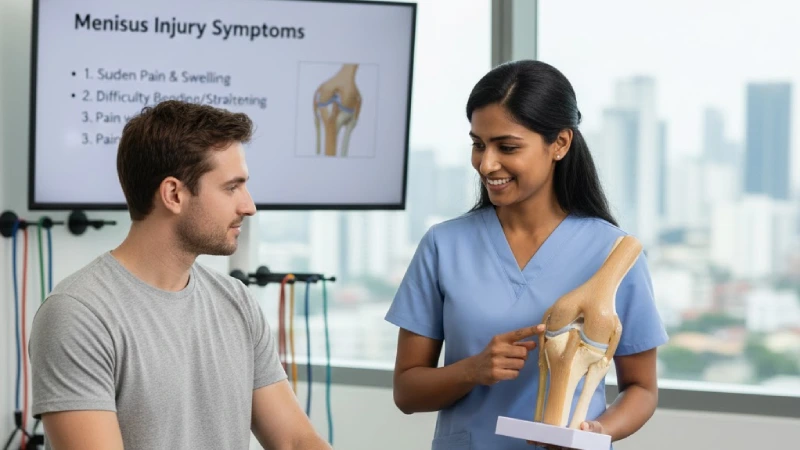
“When someone walks into my clinic holding their knee and telling me, ‘It only hurts when I bend or twist,’ I already know we’re dealing with something more than a simple strain,” says Dr. Raina Ranney, Senior Musculoskeletal & Sports Physiotherapist. In most cases, that troubling Knee Pain is actually a meniscus injury — one of the most common causes of deep, shocking knee discomfort today.
With India’s fitness culture booming, knee injuries are rising rapidly. Data shows nearly 25% of knee issues brought to physiotherapy centers across Mumbai are meniscus-related. The worrying part? Many patients ignore symptoms until the tear worsens, making recovery longer and more complex.So how can you tell if your Knee Pain is coming from your meniscus? Here’s your complete, physio-approved guide.
The Meniscus – The Knee’s Silent Protector
The meniscus is a C-shaped cushion made of fibrocartilage that sits between your thigh bone and shin bone. Think of it as your knee’s shock absorber — it cushions impact, protects the joint surfaces, and ensures smooth movement.
When the meniscus tears, the joint loses this natural buffer, leading to deep, sharp, movement-specific Knee Pain, locking, and stiffness. Meniscus injuries are especially common in runners, gym-goers, dancers, footballers, and people whose work involves bending or twisting.
How Meniscus Pain Feels – Symptoms You Should Not Ignore
A meniscus tear has very clear warning signs. Patients usually report:
- Sharp pain along the inside or outside of the knee
- A popping sound or sensation during the injury
- Clicking, catching, or locking when bending
- Pain while squatting or climbing stairs
- Gradual swelling within 12–24 hours
- Discomfort after long sitting
- Feeling that the knee might “give way”
Unlike ligament injuries, meniscus pain often begins mild — then worsens with time, especially if untreated.
The Different Types of Meniscus Tears Explained
Knowing the type of tear helps determine your recovery timeline and the right physiotherapy plan.
Degenerative Tears
Gradual wear-and-tear, common over age 40. These tears often coexist with arthritis.
Traumatic Tears
Sudden twisting during sports, running, or deep squats.
Bucket-Handle Tears
A serious injury where a portion of the meniscus flips, causing severe locking.
Radial / Horizontal Tears
Frequently seen in active adults; may cause persistent pain but mild swelling.
Whether minor or severe, prompt physiotherapy prevents worsening.
Why Meniscus Injuries Really Happen — Causes You Don’t Notice Daily
Beyond sports injuries, everyday habits can trigger or worsen tears:
- Weak glutes causing knee collapse inward
- Tight quadriceps from long hours of sitting
- Incorrect running form
- Heavy weight training with poor knee alignment
- Age-related cartilage wear
- Sudden increases in activity (common before marathons)
These underlying issues make early sports physiotherapy essential.
How a Physiotherapist Confirms a Meniscus Injury
At Genesis Sports Physiotherapy Clinic, diagnosis begins with a detailed functional assessment — often more revealing than imaging.
Your physio checks:
- Joint-line tenderness
- Range of motion
- McMurray’s or Thessaly meniscus tests
- Hip–knee–ankle strength
- Balance and stability
- Gait/running mechanics
- Swelling and mobility restrictions
MRI is suggested only when necessary — especially if the knee locks or surgery is considered.
Your Road to Recovery — Physiotherapy Treatment That Works
Most meniscus injuries DON’T require surgery.
The primary line of management is evidence-based physiotherapy, focusing on:
- Pain and swelling reduction
- Restoring knee mobility
- Strengthening the quadriceps, hamstrings, glutes
- Correcting alignment and gait
- Building stability through functional exercises
- Improving balance and proprioception
- Long-term injury prevention
Hands-on treatment like cupping, dry needling, soft tissue release, and taping accelerates relief. Strengthening forms the core of rehab — especially glute activation, hip stability, and quadriceps control.
When Surgery Is Necessary
Surgery may be recommended if:
- The knee is locking or stuck
- Pain persists despite structured rehab
- A bucket-handle tear is confirmed
- Active athletes require faster return
- The tear is large and unstable
Even after surgery, knee rehabilitation remains essential.
Inside the Mind of a Sports Physio — Dr. Raina Ranney’s Approach to Pain-Free Movement
“I’ve always believed physiotherapy isn’t just about fixing pain — it’s about restoring confidence, strength, and trust in your own body,” says Dr. Raina Ranney.
Her journey began with a Bachelor’s degree from D.Y. Patil College, followed by a Master’s in Musculoskeletal Physiotherapy from the University of Melbourne. Along the way, she trained extensively in dry needling, cupping, movement correction, sports rehab, manual therapy, and joint mobilization.
“What drives me,” she adds, “is helping patients return to what they love — running, dancing, lifting, playing, or even walking pain-free. My goal is always to treat the root cause, not just the pain.”Her clinic — Genesis Sports Physiotherapy Clinic — established in 2012, stands as one of Mumbai’s most trusted physiotherapy centers. With over 1000+ patients treated, Genesis bridges the gap between traditional medical care and true functional recovery.
The clinic emphasizes:
- One-on-one attention
- Hands-on therapy over machine-based treatment
- Functional strengthening
- Personalized rehab plans
- Long-term lifestyle improvement
Their focus is simple: help people move better, recover faster, and stay injury-free.
What Runners, Athletes & Patients Say
Mihir Desai
“My knee kept clicking for months. Dr. Raina Ranney diagnosed my meniscus issue instantly and guided me back to training.”
Maria Coutinho
“I avoided surgery entirely because of her strengthening program. My mobility is back!”
Vedant Rao
“The combination of dry needling and hip-stability training gave me my confidence back.”
Sana Merchant
“I had swelling and knee locking. After 6 sessions, the improvement was remarkable.”5. Arjun Kapoor
“My knee stability has never been better. Best physio experience I’ve had.”
FAQs
Moderate tears: 6–10 weeks
Post-surgery rehab: 3–5 months
Meniscus injuries often start as mild Knee Pain, but with early evaluation and targeted physiotherapy, recovery is not just possible — it’s predictable. With expert guidance from Dr. Raina Ranney and the advanced, hands-on techniques at Genesis Sports Physiotherapy Clinic, patients return to strong, confident, pain-free movement.
If your knee locks, clicks, or hurts while twisting or squatting — don’t wait. The sooner you treat it, the faster you heal.
Contact Genesis Sports Physiotherapy Clinic
📍 A1, 1st Floor, Hermes House, Opera House, Near Vijay Sales, Mumbai – 400007
📞 +91 98332 11417
📧 genesisphysio@gmail.com📍 Healthspring Clinic, Ground Floor, Sainara Building, Cuffe Parade, Mumbai – 400005
🌐 https://genesisphysio.co.in/