
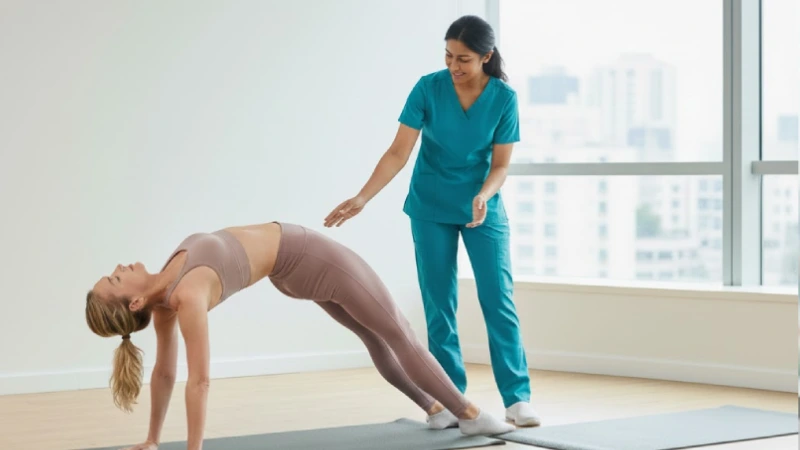
“When women in their 40s walk into my clinic and whisper, ‘I leak a little when I sneeze… is that normal?’ or ‘My core feels weak after childbirth,’ my answer is always the same — your pelvic floor is calling for attention,” says Dr. Raina Ranney, Senior Musculoskeletal & Sports Physiotherapist.
Around 1 in 3 women over 40 experience pelvic floor weakness, yet very few seek care early. The truth is: the right Pelvic Floor Exercises for Women can improve bladder control, reduce pain, prevent prolapse, and dramatically enhance confidence and daily comfort.
Whether you are navigating perimenopause, recovering from childbirth, or simply want stronger core stability, this is the perfect decade to begin strengthening your pelvic floor.
Here’s everything women in their 40s should know — backed by science and physiotherapy.
Why Pelvic Floor Health Declines in Your 40s
As women approach their 40s, hormonal shifts begin. Estrogen levels drop, affecting muscle elasticity and connective tissues. Years of childbirth, desk jobs, incorrect posture, constipation, and heavy workouts add stress to the pelvic muscles.
This leads to:
- Reduced bladder control
- Lower back pain
- Pelvic heaviness
- Painful intercourse
- Core instability
- Urgency or frequency
The right Pelvic Floor Exercises for Women can reverse most of these issues naturally, without medication or procedures.
What Exactly Is the Pelvic Floor — and Why It Matters
Your pelvic floor is a bowl-shaped group of muscles that support the bladder, uterus, and bowel. It controls urination, sexual function, core strength, and spinal stability.
Weak pelvic floor muscles put pressure on the lower back and affect day-to-day activities like walking, lifting, and even breathing patterns.
A well-functioning pelvic floor =
✔ Better bladder control
✔ Improved posture
✔ Stronger core
✔ Better intimacy
✔ Lower injury risk
This is why women’s health physiotherapy prioritizes pelvic floor training once you enter your 40s.
Signs Your Pelvic Floor Needs Strengthening
Most women ignore early symptoms, believing they’re “just part of aging.” They’re not.
Watch out for:
- Leaking urine when coughing, sneezing, or laughing
- Difficulty holding urine
- Pelvic heaviness
- Painful intercourse
- Constipation
- Hip or low-back pain
- Feeling “loose” or unstable while lifting or walking
If you relate to even one of these, structured pelvic floor physiotherapy can help.
Physiotherapy-Backed Pelvic Floor Exercises Women Should Do Daily
These exercises target strength, endurance, and coordination — the three pillars of pelvic health.
Kegel Contractions
The most essential exercise. Contract the pelvic muscles (as if stopping urine), hold, release. Rebuilds strength and control.
Long Holds
Hold the same contraction for 5–8 seconds. Helps bladder endurance.
Quick Flicks
Short, rapid contractions. Supports sudden pressure changes (like sneezing).
Bridge with Pelvic Activation
Strengthens glutes + pelvic floor + lower back.
Deep Core Breathing
Trains diaphragm and pelvic floor coordination.
Hip Strengthening
Supports pelvic alignment and prevents overcompensation.
These exercises form the foundation of Pelvic Floor Exercises for Women recommended worldwide.
Why Physiotherapy Makes All the Difference
Every woman’s pelvic floor is different — some muscles are weak, others are over-tightened. Doing random exercises from the internet can worsen symptoms.
At Genesis, pelvic floor assessment includes:
- Posture analysis
- Core strength testing
- Breath mechanics
- Internal/external pelvic floor evaluation
- Hip and spine mobility
This helps create a customized program with pelvic floor strengthening, core stability work, and functional training tailored to your body.
How Hormones, Stress & Lifestyle Affect Your Pelvic Floor
Your 40s bring hormonal changes (perimenopause), stress, weight fluctuations, sleep issues, and slower tissue recovery. These factors affect muscle tone and nerve signals.
Physiotherapy helps by:
- Teaching proper breathing
- Correcting posture
- Improving circulation
- Restoring neuromuscular control
- Reducing tension zones
- Enhancing core-pelvic coordination
A holistic approach ensures long-term results.
Inside the Mind of a Women’s Health Physio — Dr. Raina Ranney’s Philosophy
“I tell every woman who enters her 40s — don’t wait for symptoms to begin. Strengthening your pelvic floor today prevents problems tomorrow,” says Dr. Raina Ranney.
With a Bachelor’s degree from D.Y. Patil College and a Master’s in Musculoskeletal Physiotherapy from the University of Melbourne, Dr. Raina Ranney has spent years helping women restore pelvic health through evidence-based physiotherapy. Her additional training in manual therapy, movement correction, core rehabilitation, dry needling, and women’s health physiotherapy gives her a comprehensive view of pelvic function.
She leads Genesis Sports Physiotherapy Clinic, established in 2012 — a trusted space where over 1000+ women and athletes have regained strength, mobility, and confidence. The clinic focuses on:
- Hands-on treatment
- Functional strengthening
- Personalized exercise plans
- Prehab to prevent injuries
- Long-term core and pelvic stability
“Our goal is simple,” she says. “Improve movement, build strength, and help women live without fear of leakage, pain, or instability.”
What Women Say After Pelvic Floor Physiotherapy
Anjali S.
“I stopped leaking while sneezing within 4 weeks. I wish I had started earlier.”
Ritu Mehra
“Dr. Raina Ranney explained everything so clearly. My core feels stronger than it has in years.”
Supriya Dalvi
“The pelvic heaviness is gone. I can walk and lift without fear now.”
Farah Merchant
“Genesis Clinic gave me a personalized plan — not the generic Kegels you find online.”
Meenal Patkar
“After two pregnancies, I finally feel like my body is back. Life-changing.”
FAQs
Your 40s are the perfect time to take charge of your pelvic health. With the right Pelvic Floor Exercises for Women, guided by expert physiotherapy, you can rebuild strength, improve bladder control, enhance intimacy, and future-proof your core.
With Dr. Raina Ranney and the evidence-based approach at Genesis Sports Physiotherapy Clinic, women regain confidence, stability, and long-lasting pelvic health.
If you’ve been experiencing leakage, heaviness, or weakness — or simply want to age stronger — this is your sign to begin.
Contact Genesis Sports Physiotherapy Clinic
📍 A1, 1st Floor, Hermes House, Opera House, Near Vijay Sales, Mumbai – 400007
📞 +91 98332 11417
📧 genesisphysio@gmail.com
📍 Healthspring Clinic
Ground Floor, Sainara Building
Cuffe Parade, Mumbai – 400005🌐https://genesisphysio.co.in/